

The flag of Japan — a single crimson disc on a pure white field — is one of the most recognizable national symbols on earth. Known as the Hinomaru, or "circle of the sun," it has represented this island nation for over a thousand years. Simple by design, rich in meaning, and deeply woven into Japanese daily life, it tells a story that goes far beyond fabric and dye.

Key Takeaways Japan
- The flag of Japan is called the Hinomaru (日の丸) meaning "circle of the sun".
- The flag was made officially legal on August 13, 1999, under the Act on National Flag and Anthem.
- The design is a crimson-red disc (#BC002D) centered on a pure white rectangle.
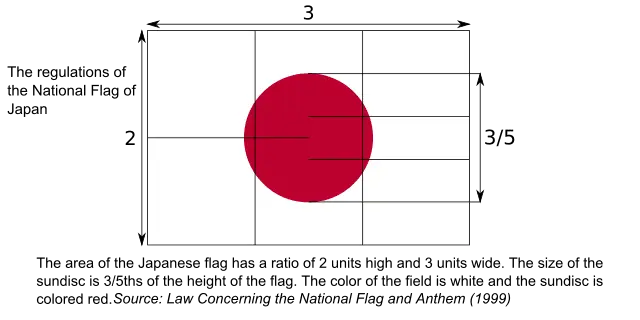
- Flag proportions are 2:3, and the disc diameter equals 3/5 of the flag's height.
- The red sun represents Amaterasu, the sun goddess, and Japan's identity as the "Land of the Rising Sun".
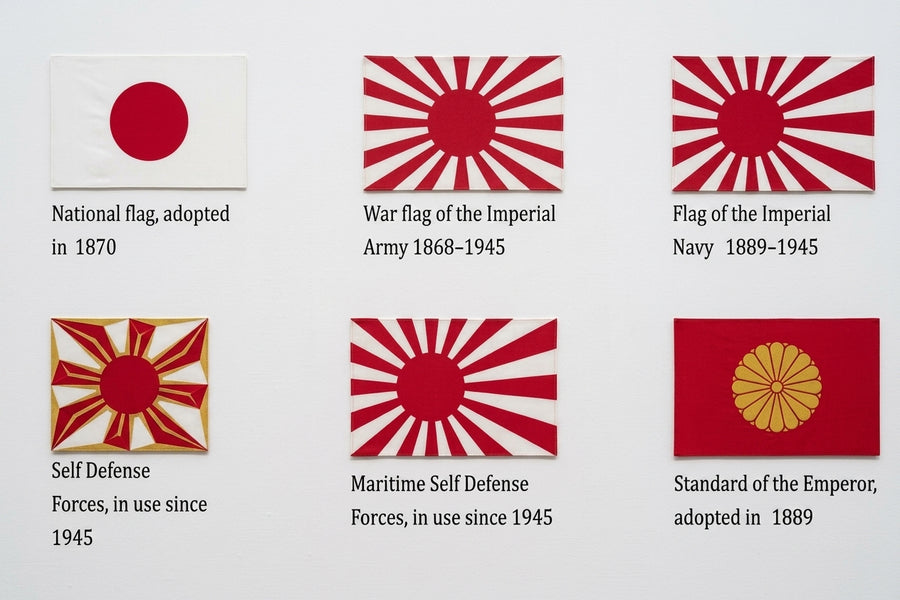
- The Hinomaru is not the same as the Rising Sun flag — they are two distinct symbols.
- The flag was made officially legal on August 13, 1999, under the Act on National Flag and Anthem.
Flag Specifications
| Aspect | Specification |
|---|---|
| Official name | Nisshōki (日章旗) |
| Common name | Hinomaru (日の丸) |
| Country | Japan |
| Officially adopted | 13 August 1999 |
| First recorded use | Historical use dates back to the Heian period (exact origin unconfirmed) |
| Proportions | 2:3 (height × width) |
| Field color(s) | White |
| Symbol color(s) | Red (crimson) |
| Symbol size | Disc diameter = 3/5 of flag height |
| Symbol position | Centered |
| Color codes | #BC002D / Pantone 186 C |
| Legal authority | Act on National Flag and Anthem (1999) |
What the Flag of Japan Looks Like
Meaning & Symbolism
White
#FFFFFF
Honesty, purity, and peace. The white field represents the open, sincere character that Japan's imperial and samurai traditions placed at the center of ethical life
Crimson Red
#BC002D
The sun, warmth, brightness, and sincerity. This exact shade — deeper than scarlet, darker than cherry — was chosen for its visual authority and its connection to Japan's solar mythology.
How to Identify the Flag of Japan
History of the Japanese Flag
Flag Etiquette in Japan
Travel Tips: Seeing the Hinomaru in Japan
Conclusion

Frequently Asked Questions
What is the flag of Japan called?
The flag of Japan has two names. Its official legal name is Nisshōki (日章旗), meaning "sun-mark flag." It is most commonly known as the Hinomaru (日の丸), meaning "circle of the sun." Both names refer to the same flag.
What does the red circle on the Japanese flag mean?
The red circle represents the sun, specifically the sun goddess Amaterasu (天照大御神) from Shinto mythology. The imperial family is said to descend from Amaterasu, and Japan's name — Nihon — literally means "origin of the sun." The disc visualizes Japan's identity as the Land of the Rising Sun.
When was the Japanese flag officially adopted?
The Hinomaru was first formally used in 1870 as a civil maritime ensign during the Meiji period. However, it was not established by law until August 13, 1999, when Japan's parliament passed the Act on National Flag and Anthem.
What are the proportions of the Japanese flag?
The flag uses a 2:3 ratio (height to width). The red disc has a diameter equal to three-fifths (3/5) of the flag's height, and is positioned at the exact center of the rectangle.
Is the Rising Sun flag the same as the Japanese national flag?
No. They are two different flags. The Hinomaru (national flag) is a single red disc on a white field. The Rising Sun flag (Kyokujitsu-ki) adds 16 red rays emanating from the disc. The Rising Sun flag is used by Japan's Self-Defense Forces but carries painful historical associations in parts of East Asia due to its use during World War II.
What colors are on the Japanese flag and what do they mean?
The Japanese flag uses two colors: pure white (#FFFFFF) for the background, symbolizing honesty and purity, and crimson red (#BC002D) for the central disc, representing the sun and the country's name "Land of the Rising Sun.
Why is the Japanese flag called the Hinomaru?
Hinomaru" literally means "circle of the sun" in Japanese — hi (sun) + no (of) + maru (circle). The official name is Nisshōki ("sun-mark flag"), but Hinomaru remains the everyday term used by Japanese people for over 1,000 years.
How is the Japanese flag different from the South Korean flag?
Japan's flag shows a single red disc on white. South Korea's Taegukgi shows a red-and-blue yin-yang circle surrounded by four black trigrams. Both use white backgrounds, but the symbols and meanings are entirely distinct.
Can tourists fly or display the Japanese flag in Japan?
Yes — tourists may respectfully display the Japanese flag at homes, hotels, or public events. Japan has no flag desecration law for foreigners, but the flag should never touch the ground, be worn as clothing, or used commercially without context.
The Hinomaru in Popular Culture
The Hinomaru appears in contexts far beyond formal ceremony:
- Manga and anime: Characters in nationalist or patriotic storylines often appear with the Hinomaru, most notably in sports series like Captain Tsubasa and Haikyu!! during international competition arcs.
- Yosegaki Hinomaru: During World War II, it was a widespread custom to have friends and family sign the white field of a Hinomaru as a good luck charm (yosegaki) for soldiers heading to war. Thousands of these signed flags ended up overseas and are now being repatriated to Japan through organizations like the Obon Society.
- Flag emoji: The Japan flag emoji 🇯🇵 is consistently one of the top-10 most used national flag emojis globally, driven by high international interest in Japanese culture, food, and travel.
- Product design: The Hinomaru's aesthetic has influenced Japanese graphic design, product packaging, and brand identity for over a century. Its restraint — maximum meaning from minimum elements — mirrors the broader Japanese design philosophy seen in everything from Sony hardware to Muji notebooks.
Was this article helpful?
Thanks for your feedback!


